
Holdings of the Westphalia Division

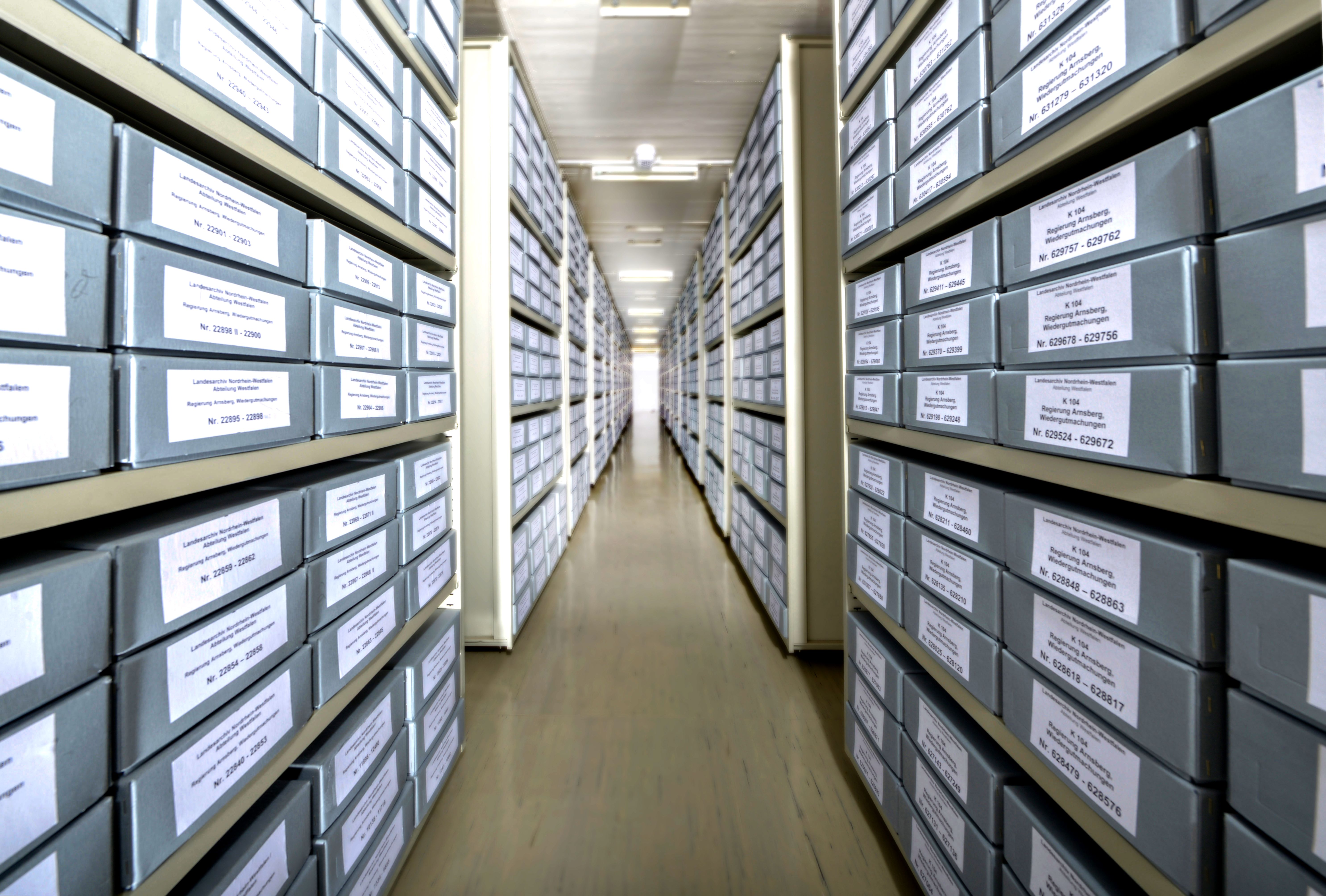
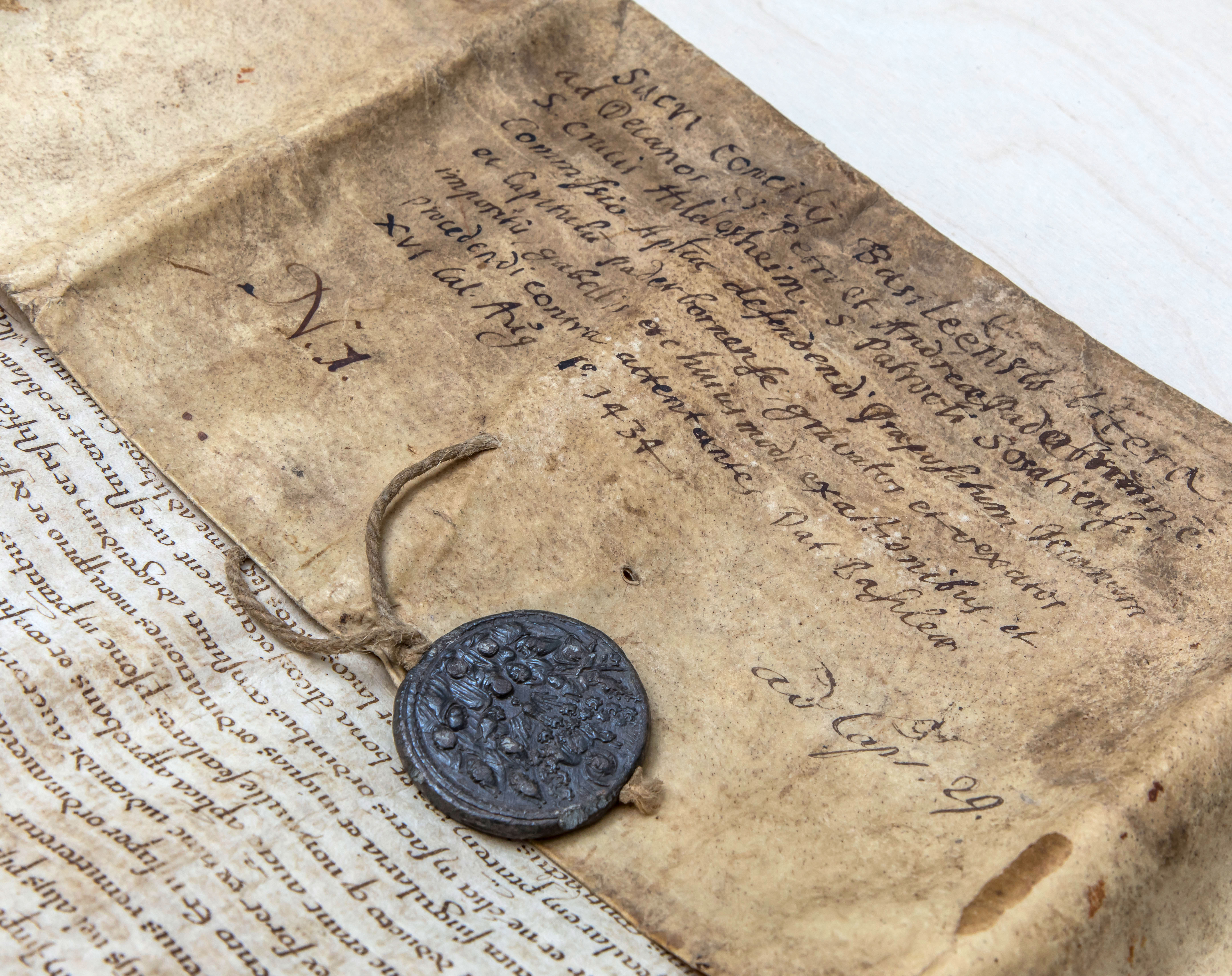
The Westphalia Division of the Landesarchiv Nordrhein-Westfalen holds around 100,000 parchment documents, approximately 30 kilometres of files, official records and manuscripts, as well as around 80,000 maps and plans, posters, proclamation boards, ...

The Westphalia Division of the Landesarchiv Nordrhein-Westfalen holds around 100,000 parchment documents, approximately 30 kilometres of files, official records and manuscripts, as well as around 80,000 maps and plans, posters, proclamation boards, photographs and electronic archive material.

Among the oldest and most valuable sources are a fragment from the work of Isidore of Seville from the 7th century, an Easter table from Corvey dating from the 7th to 12th centuries, a papyrus document from the papal chancellery from 891, a purple document from Emperor Conrad III from 1151, and the manuscript of the ‘Lex Saxonum’ from around 950, which records Saxon folk law.

The archive holdings are structured as follows.

  1. Territories of the old empire until 1802/03
  2. Authorities of the transitional period from 1802 to 1816
  3. Authorities and institutions of the state and local government after 1816
  4. Non-governmental archive material

In addition, the Westphalia Division has an extensive reference library.

Show more Show less

1. Territories of the old empire until 1802/03

The older part of the holdings comprises the archives of the former imperial estates from the period before 1803/1806 from the area of what later became the Prussian province of Westphalia, with the exception of the imperial city of Dortmund and a few mostly smaller Westphalian counties and dominions, as well as most of the short-lived compensation territories that were created in 1803 in connection with the Imperial...

The older part of the holdings comprises the archives of the former imperial estates from the period before 1803/1806 from the area of what later became the Prussian province of Westphalia, with the exception of the imperial city of Dortmund and a few mostly smaller Westphalian counties and dominions, as well as most of the short-lived compensation territories that were created in 1803 in connection with the Imperial Deputation Main Resolution.

Of particular importance are the extensive archives of the ecclesiastical territories of the Prince-Bishopric of Münster and the Prince-Bishopric of Paderborn, the Electorate of Cologne's Duchy of Westphalia and the Vests Recklinghausen, the Principality of Siegen, and the Prussian possessions of the Principality of Minden, the County of Ravensberg, the County of Mark and the County of Tecklenburg. In addition, there are the documents and files of numerous dissolved Westphalian monasteries and convents. Particularly noteworthy is the valuable collection of documents and files from Corvey Abbey.

Since 1924, our archive has also held around 6,500 court records relating to Westphalia from the Imperial Chamber Court (and a few from the Imperial Court Council) from the early 16th century to 1806.

Show more Show less

2. Authorities during the transitional period from 1802 to 1816

The group ‘Transitional Authorities’ from 1802 to 1816 comprises the records of changing, often short-lived authorities during the Napoleonic era, including documents relating to Westphalia from the French Empire, the Kingdom of Westphalia and the Grand Duchy of Berg.

3. State and local government authorities and institutions after 1816

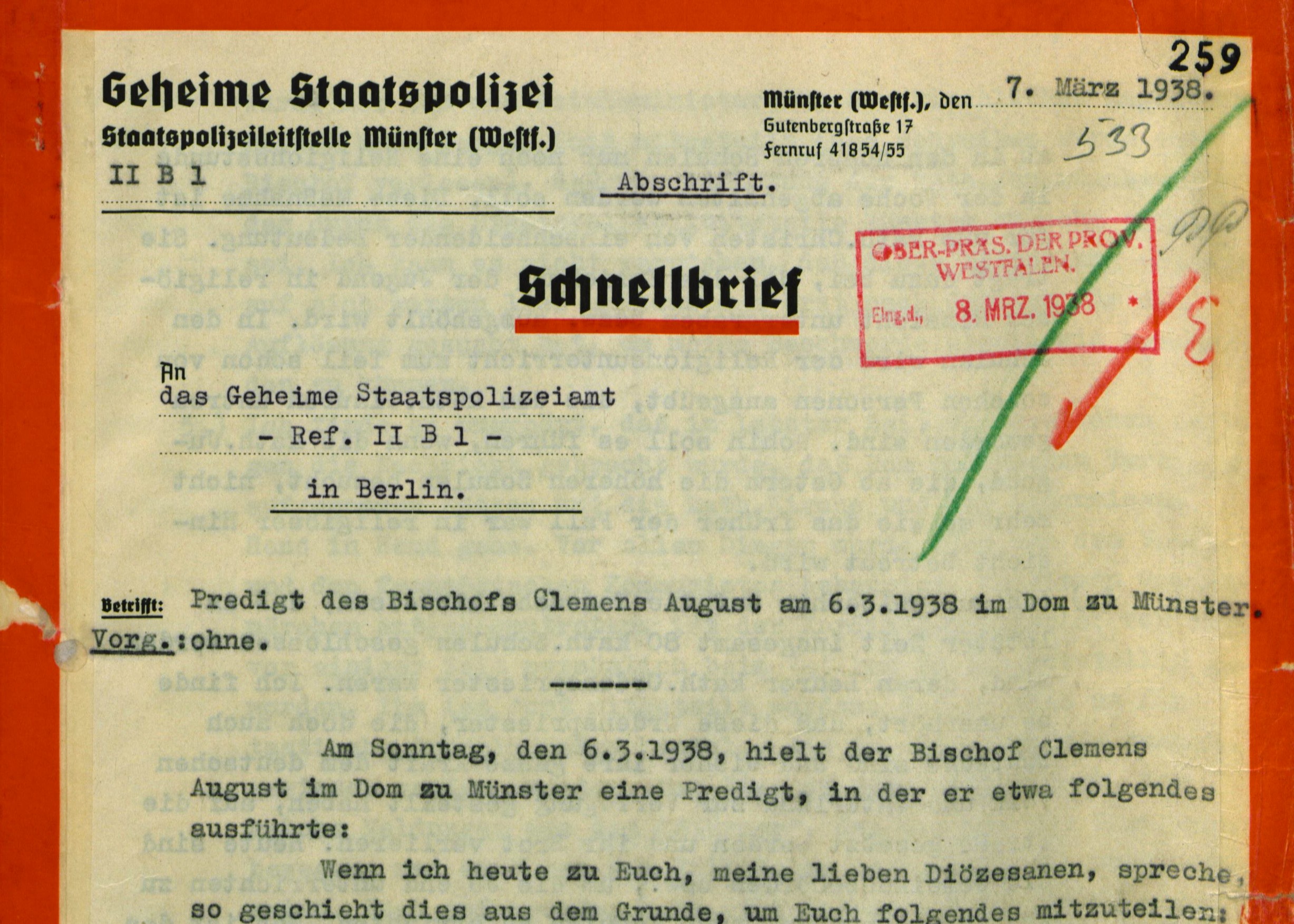
By far the largest part of the holdings, accounting for over two-thirds of the total, consists of records from state authorities and institutions after 1816, including the files of the internal administration (Provincial Government of Westphalia, governments in Arnsberg and Münster, and the district administrations until their municipalisation in 1946), as well as the financial, economic, transport, cultural and judicial administrations.

4. Non-governmental documents / Archival collections

In addition to state records, non-state archive material is also stored, mostly as deposits, from parties (including NSDAP organisations in the Westfalen-Nord and Westfalen-Süd districts), associations, clubs, organisations, estates and commercial enterprises, families and individuals. Notable examples include the important Westphalian aristocratic archives of the Counts of Landsberg-Velen and the...

In addition to state records, non-state archive material is also stored, mostly as deposits, from parties (including NSDAP organisations in the Westfalen-Nord and Westfalen-Süd districts), associations, clubs, organisations, estates and commercial enterprises, families and individuals. Notable examples include the important Westphalian aristocratic archives of the Counts of Landsberg-Velen and the Barons of Romberg.

Furthermore, documentation work is also being carried out to an increasing extent through the collection of estates of public figures, printed matter and posters from political parties, image material and audiovisual documentation.

Show more Show less