
The holdings of the East Westphalia-Lippe Division
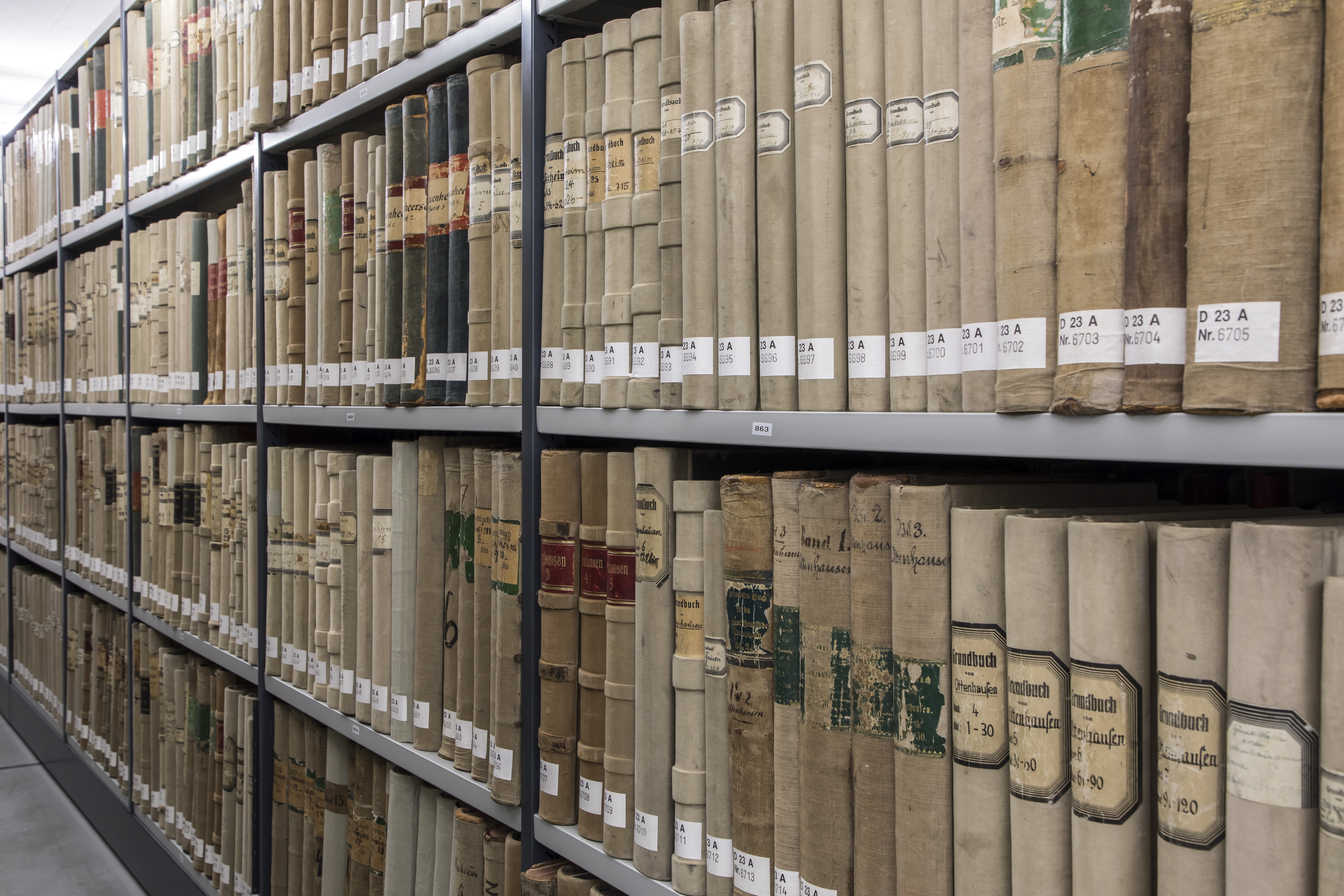
The holdings cover approximately 800 years of East Westphalian-Lippe history, ranging from the Middle Ages to the present day.
The holdings are divided into:
- approx. 12,000 documents
- approx. 27 km of files and official records
- approx. 100,000 maps
- approx. 40,000 photographs
- approx. 400 (video) films and
- approx. 12,000 posters
- approx. 77,000 duplicate church records and civil registers as well as 180,000 supplementary civil registers
1. County of Lippe (until 1947)
The former Lippe State Archives form the core collection of today's East Westphalia-Lippe Division. From the lowest level to the ministerial sphere and the judiciary, the administrative activities of a small German state have been almost completely documented since the end of the 15th century. The oldest document dates from 1207 and comes from the monasteries in Lippe that were dissolved during the Reformation. In addition, there are the Lippe State Parliament Archives, the files of the court authorities and those of the Imperial Governor for Lippe and Schaumburg-Lippe, the archives of the Westphalian Counts' Council and the files of the Imperial Chamber Court. With the files of the NSDAP district leaderships of Lemgo, Detmold and Lippe, the Landesarchiv Nordrhein-Westfalen has a comprehensive collection of documents from the otherwise poorly documented middle level between the Gau and local group leaderships.
2. Minden administrative district (1816–1947), Detmold administrative district (since 1947)
The Minden collection includes the files of the Prussian government in Minden and all administrative and judicial authorities located within this district. The records begin in 1816 and end in 1947. They also include some files from district, local and municipal administrations. The documents of state authorities and institutions that continued to exist after 1947 or were newly established form the most recent collection group, ‘Detmold Administrative District’. Not to be forgotten are the police authorities, the judiciary and the health and social administration. In addition, there are files from federal authorities such as the finance and labour administrations. Maps and plans supplement these records. These holdings are regularly expanded through deliveries from authorities.
3. Organisations, goods, families, individuals
4. Collections
To supplement the archive material of state origin, the East Westphalia-Lippe Division maintains its own collections. These include the estates of important personalities, pictures of people, buildings and events, posters and pamphlets. It also takes over association and company archives that are significant for the region. The private aristocratic archives in Lippe are also held in deposit in the East Westphalia-Lippe Division.
5. Civil Status Archive Westphalia-Lippe
The civil registry archive manages civil registry records from all of Westphalia and Lippe, i.e. from the administrative districts of Arnsberg, Detmold and Münster. These mainly include duplicate church records for the period from 1779 to 1875, civil registers under French law from 1808 to 1814, registers of Jews and dissidents from 1808 to 1876, and secondary civil registers (second books) for the years since 1874/76.